A specialty Mustang should make you want to open the garage door. A compelling test result gives you another reason to do it. The interesting question here is how each car delivers its performance, and what that means for the enthusiast choosing between them.
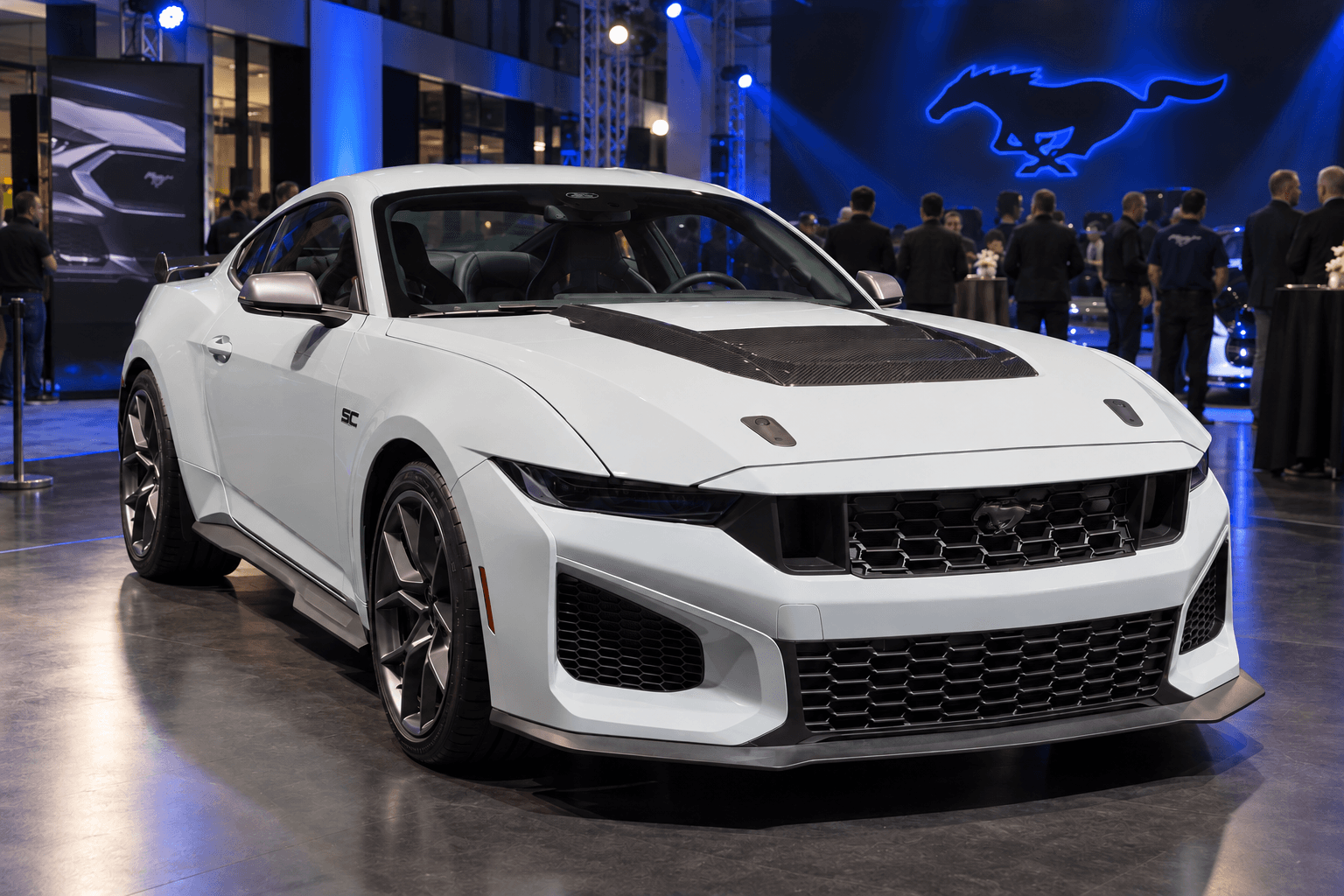
Ford rates the Dark Horse SC at 795 horsepower from a supercharged 5.2-liter V8. Its available Track Pack includes carbon-fiber wheels and carbon-ceramic brakes.[6]
Car and Driver’s October 6 comparison brings together the 2026 Dark Horse SC, 2025 GTD and 2020 Shelby GT500. The measurements below are Car and Driver’s instrumented results.[1]
The SC test car had the Track Pack Special Edition equipment. Results should not be assigned to an unequipped SC or a convertible.[2]
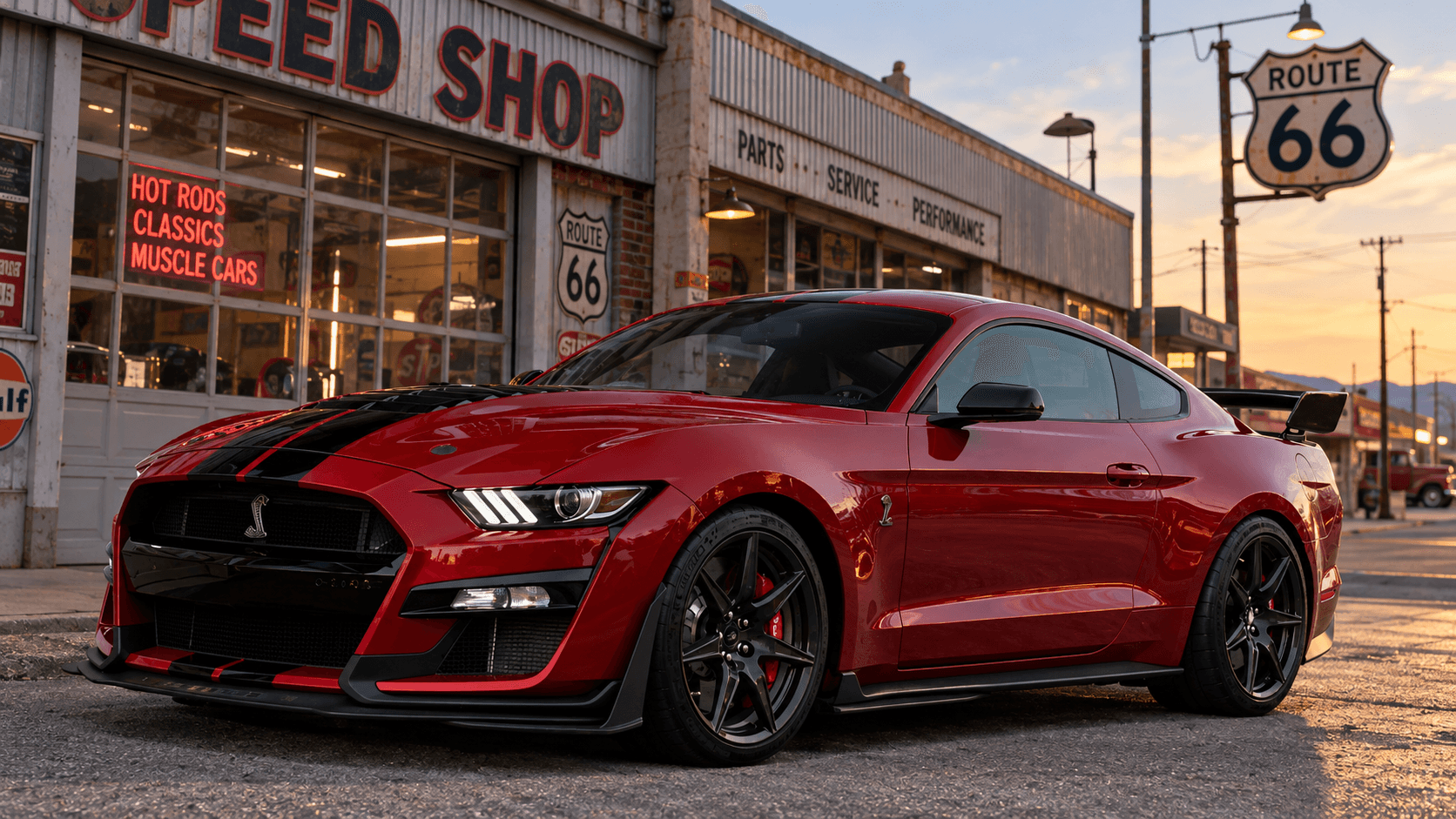
The GT500 column uses the Carbon Fiber Track Pack car, not the separate street-tire test. Package identity matters when comparing these results.[4]
Standing-start times use Car and Driver’s one-foot rollout convention.[5]
These are tests from different dates, rather than a controlled same-day shootout.[2][3][4]
The GTD heads the acceleration columns. Yet elapsed time and terminal speed answer different questions: reaching the finish first and travelling fastest at the finish are distinct achievements. Neither measurement alone describes the whole car.
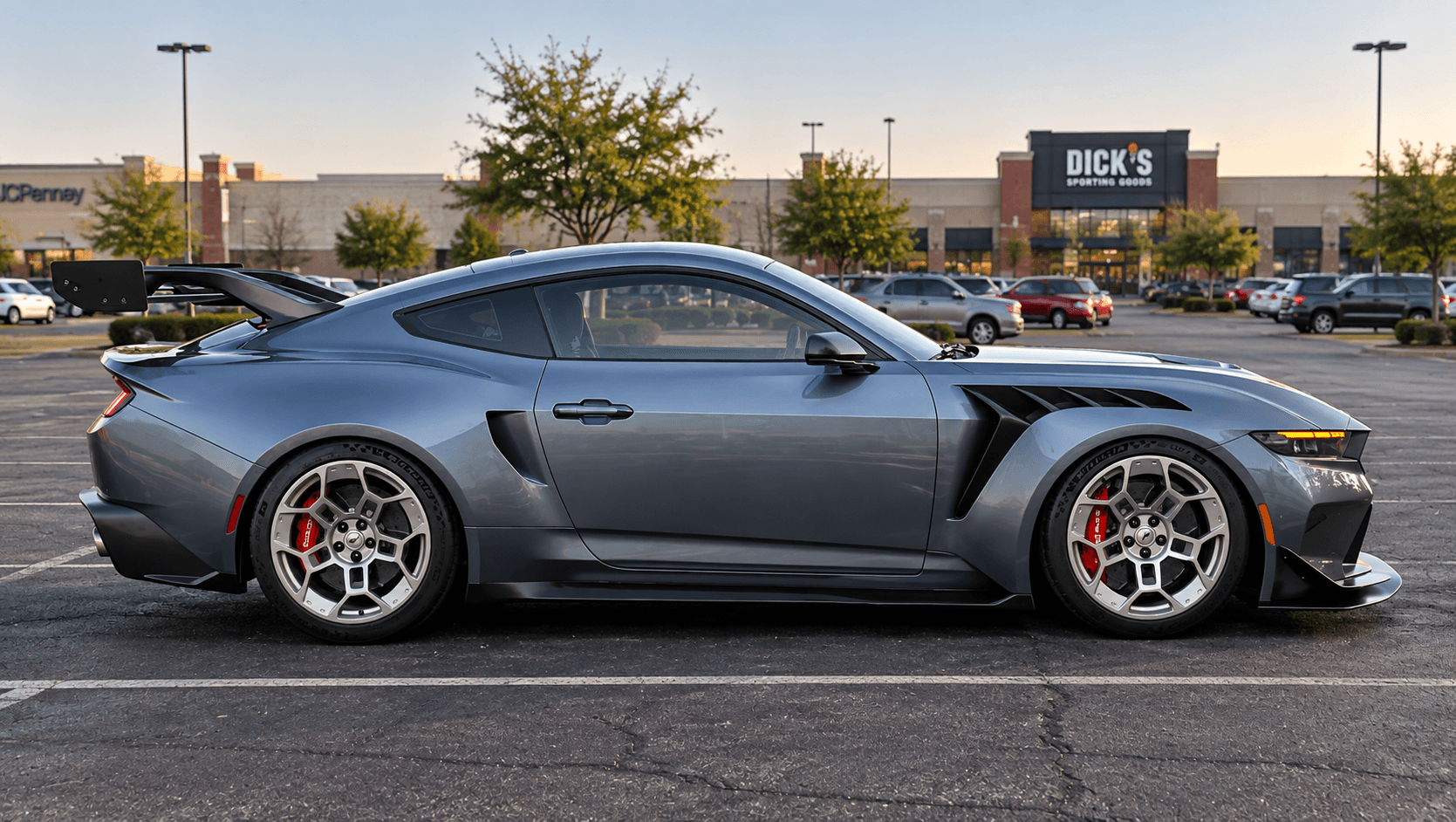
The SC’s stopping distances beat the GTD by one foot in both measurements. The comparison reports that its alignment favored straight-line performance, while the GTD and GT500 used grip-oriented camber adjustments.[1]
A one-foot margin does not establish a repeatable braking advantage. Likewise, the skidpad order should not become a blanket handling verdict. Alignment is a meaningful test condition, and a skidpad figure does not measure a complete lap or tell you how a car communicates near its limit.
The GTD uses a rear-mounted dual-clutch transaxle and race-derived suspension. That makes it a different engineering proposition from a conventional Mustang performance upgrade.[3]
For a RAREREG reader, the useful comparison begins with the exact example: equipment, tires, alignment, maintenance and modifications. A model badge cannot establish that an individual car matches the tested specification. Keep the original build information alongside any changes made for track use.
The Dark Horse SC deserves attention without requiring the Shelby’s story to end. Choose the performance character you want to use, then document the car you actually own. None of these results establishes production rarity, future value or a guaranteed result for another vehicle.
THE EVIDENCE
Sources & scope
- Showdown of Supercharged Stangs: Dark Horse SC vs. GTD vs. GT500
Car and Driver · Jack Fitzgerald · technical specialist · Accessed
Requested comparison. Independent instrumented results belong to Car and Driver, not RAREREG. Historical tests, not a simultaneous three-car test.
Source issued
- 2026 Mustang Dark Horse SC instrumented test
Car and Driver · technical specialist · Accessed
Track Pack Special Edition test car; specifications panel and alignment qualification.
Source issued
- 2025 Mustang GTD instrumented test
Car and Driver · technical specialist · Accessed
GTD results and architecture. Its references to the street-tire GT500 must not replace the Track Pack dataset.
Source issued
- 2020 Shelby GT500 versus Camaro ZL1 1LE
Car and Driver · technical specialist · Accessed
Original Carbon Fiber Track Pack GT500 dataset: 3.6-second 60 mph, 7.1-second 100 mph, 11.4-second quarter-mile, 142/279-foot braking and 1.13-g skidpad.
- Car and Driver testing explained
Car and Driver · technical specialist · Accessed
Standing-start acceleration uses one-foot rollout; measurements are not guaranteed owner outcomes.
- Ford Mustang Dark Horse SC specifications
Ford · manufacturer · Accessed
Manufacturer-rated 795 hp and 5.2-liter supercharged V8; equipment descriptions, not independent performance measurements.